Orkney
The wrecks of Scapa Flow
Scapa Flow, the great natural harbour enclosed by the islands of Orkney, was the Royal Navy's main anchorage in both World Wars. Its seabed holds wrecks from both wars: German warships scuttled in 1919, British battleships lost with most of their crews, and old ships sunk on purpose to block the channels.
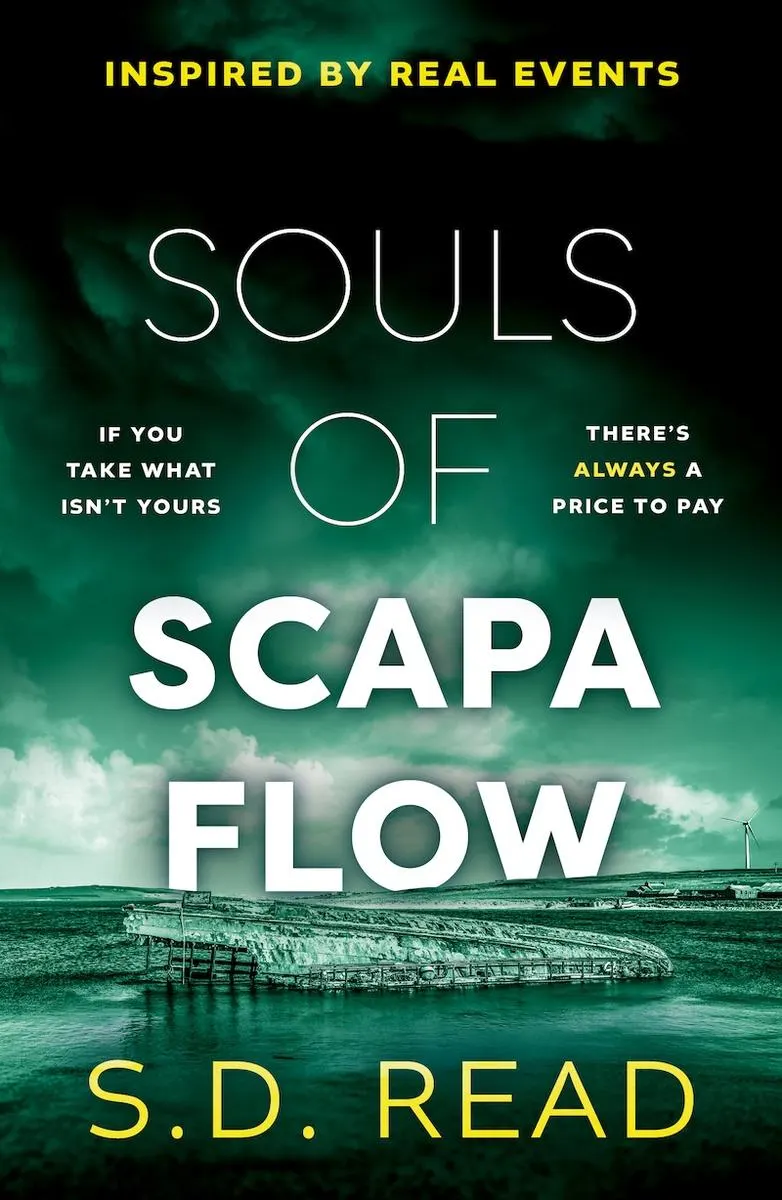
Souls of Scapa Flow is set among these waters. This guide explains the real wrecks behind the story, which ones are war graves, and which ones divers can visit.
The scuttling of the German fleet, 1919
After the Armistice, 74 ships of the German High Seas Fleet were interned in Scapa Flow. On 21 June 1919, believing the peace talks had failed, their commander, Rear Admiral Ludwig von Reuter, ordered them to be sunk so they could not be seized. In a few hours 52 ships went to the bottom.
From 1924 Ernest Cox's firm Cox and Danks began raising the wrecks for scrap, and Metal Industries carried on the work until 1939. Most of the fleet was recovered.
The seven German wrecks that remain
Seven large German wrecks are still on the seabed: the battleships König, Kronprinz Wilhelm and Markgraf, and the light cruisers Brummer, Dresden, Karlsruhe and Cöln. Historic Environment Scotland made them Scheduled Monuments on 23 May 2001. They lie at depths of roughly 15 to 46 metres.
HMS Vanguard, 1917
The battleship HMS Vanguard exploded at anchor off Flotta on 9 July 1917, killing almost all of the 845 men aboard. Her wreck is a protected war grave and the starting point of Souls of Scapa Flow.
HMS Royal Oak, 1939
In the early hours of 14 October 1939, the German submarine U-47, commanded by Günther Prien, slipped into Scapa Flow through Kirk Sound, past the old blockships, and torpedoed the battleship HMS Royal Oak at anchor. The Royal Navy gives the number lost as 835 men and boys, many of them boy seamen; other published figures range from 833 to 835.
Royal Oak is a war grave and a Controlled Site. Each year, around the anniversary, Royal Navy divers inspect the hull and replace the White Ensign on the wreck, and an anniversary service is held at Scapa.
The blockships and the Churchill Barriers
From the First World War, old ships were sunk on purpose in the eastern channels into Scapa Flow to stop submarines getting in. By 1939 many had shifted or broken up, which is how U-47 got through.
After the loss of Royal Oak, Winston Churchill ordered the channels to be closed for good. The four Churchill Barriers, built between 1940 and 1944 and opened on 12 May 1945, now carry the road from Mainland through Lamb Holm, Glimps Holm and Burray to South Ronaldsay. Italian prisoners of war, who arrived in 1942, worked on them, and on Lamb Holm they turned two Nissen huts into the Italian Chapel.
The rusting hull of the blockship SS Reginald still breaks the surface beside Barrier 3. In Souls of Scapa Flow, Laura Matson and Callum Craigie drive past it on the way from St Margaret's Hope to Kirkwall.
Can you dive the wrecks of Scapa Flow?
Yes, some of them. Recreational divers can visit the German fleet wrecks and the blockships, with a dive permit from Orkney Harbours, on a look but do not touch basis. Since 1 November 2025 these wrecks have been protected by the Scapa Flow Historic Marine Protected Area, which makes it a criminal offence to remove, alter or disturb them. Divers should take photographs, not souvenirs, and report anything they find.
HMS Vanguard, HMS Royal Oak and HMS Hampshire are different. They are war graves and Controlled Sites under the Protection of Military Remains Act 1986, and diving on them without a licence from the Ministry of Defence is an offence.
The Kitchener Memorial, Marwick Head
On the evening of 5 June 1916, HMS Hampshire struck a mine off Marwick Head on Orkney's west coast and sank in a storm. Lord Kitchener, the Secretary of State for War, was lost with his staff on his way to Russia. Research published for the centenary puts the number lost at 737; only 12 men survived.
The stone tower on the cliff top was raised by the people of Orkney in 1926, and a memorial wall naming the dead was added for the centenary in 2016. In Souls of Scapa Flow, it is where Dwight is tripped and nearly falls over the cliff.
The Scapa Flow Museum
The Scapa Flow Museum, run by Orkney Islands Council, is in the old oil pumphouse of the Lyness naval base on Hoy. It reopened on 2 July 2022 after a major redevelopment and tells the story of Scapa Flow in both World Wars, including the scuttling and the losses of Hampshire, Vanguard and Royal Oak. It is seasonal, so check opening times before you travel.
Frequently asked questions
Sources
- Scuttling of the German Fleet, 1919, National Records of Scotland
- Scuttle and salvage at Scapa Flow, IMarEST
- The scuttling of the German fleet: salvage, Orkney Museums
- Wrecks of the German High Seas Fleet battleships (SM9298), Historic Environment Scotland
- Wrecks of the German High Seas Fleet light cruisers (SM9308), Historic Environment Scotland
- Scapa Flow Historic Marine Protected Area, Historic Environment Scotland
- Scapa Flow Historic Marine Protected Area Order 2025, Scottish Government
- HMS Royal Oak remembered, Royal Navy
- Anniversary of HMS Royal Oak sinking marked, Orkney Harbours
- U-47 in Scapa Flow, Osprey Publishing
- Churchill Barrier No 3 (LB52392), Historic Environment Scotland
- World War II: building the barriers, Orkney Museums
- Italian Chapel (LB12728), Historic Environment Scotland
- Reginald, Canmore
- HMS Hampshire, Orkney Islands Council
- Royal Navy marks centenary of sinking of HMS Hampshire, Royal Navy
- Scapa Flow Museum set to welcome visitors again from 2 July, Orkney Islands Council
- Scapa Flow Museum, Orkney Museums